Bonaire is celebrated globally as a diver’s paradise, surrounded by turquoise waters and vibrant coral reefs that teem with life beneath the surface. However, those who restrict their exploration to the coastline miss one of the most heartwarming and culturally significant experiences the island has to offer.
Just inland from the rugged southern coast lies a refuge for more than 800 donkeys. The Donkey Sanctuary Bonaire is not merely a tourist attraction; it is a dusty yet delightful haven where rescued animals live out their lives in peace. For many travellers, a visit here becomes the emotional highlight of their journey, offering a unique opportunity to connect with the island’s history through its most humble and hard-working inhabitants.
To truly appreciate the importance of the sanctuary, you must first understand the deep historical roots these animals have on the island. Donkeys were first introduced to Bonaire by Spanish explorers in the seventeenth century. In an era before cars and paved roads, these sturdy creatures were the literal backbone of the island’s economy.
They were the primary mode of transport for goods and people, but their most vital role was found in the gruelling salt industry. Under the scorching Caribbean sun, donkeys laboured in the vast salt pans, carrying heavy loads of white gold to the ships waiting at the docks. For centuries, they were indispensable partners to the people of Bonaire, navigating the rocky terrain with a sure-footedness that no other animal could match.
As the twentieth century progressed and modern technology reached the shores of the Antilles, the donkey’s role began to vanish. Trucks and tractors replaced the need for animal labour, and the once-valued workers were released into the wild to fend for themselves. While this might sound like a liberation, it led to a precarious existence.
The island’s arid climate did not provide enough natural freshwater or lush grazing, and the development of the modern world presented new dangers. Wild donkeys frequently fell victim to road accidents, suffered from severe dehydration during droughts, or were subject to neglect and abuse.
Recognising that the island owed a debt of gratitude to these animals, Marina Melis and Ed Koopman founded the Donkey Sanctuary Bonaire in 1993, starting with a single injured donkey and growing into the haven that exists today. The sanctuary benefits not just hundreds of donkeys, but also other endemic animals.
The work of the Donkey Sanctuary Bonaire extends far beyond providing food and shelter. It is a sophisticated operation focused on long-term conservation and community education.
One of the most critical parts of its mission is humane population management. To ensure that the number of donkeys does not exceed the island’s capacity, the sanctuary performs sterilisations. This prevents the cycle of overpopulation that leads to starvation and suffering in the wild. By managing the population, the sanctuary ensures that every donkey under its care receives sufficient resources, including food and fresh water.
Education is another pillar of their work. The sanctuary frequently hosts local school groups, teaching the younger generation about animal welfare and the historical significance of the donkey to Bonairean culture. By fostering a sense of pride and responsibility in the local community, the sanctuary helps ensure that the mistakes of the past are not repeated.
Every visitor’s admission fee and every bag of carrots purchased go directly toward operational costs. For those who feel a particularly strong connection to a specific animal, the sanctuary offers a popular adoption programme. This allows supporters from around the world to contribute to the ongoing care of a specific donkey, receiving regular updates and photos of their adoptee.
Now that you know the history and significance of the sanctuary, it’s time to explore it and meet its inhabitants. Follow the rules and etiquette for driving around the haven and engaging with donkeys.
One of the most remarkable aspects of the Donkey Sanctuary Bonaire is its physical layout. Spanning over 150 acres of protected land, the sanctuary is designed as a drive-through park, which creates an experience akin to a miniature safari. Upon arrival, visitors typically enter in their own vehicles, creating a safe and comfortable environment from which to observe the residents.
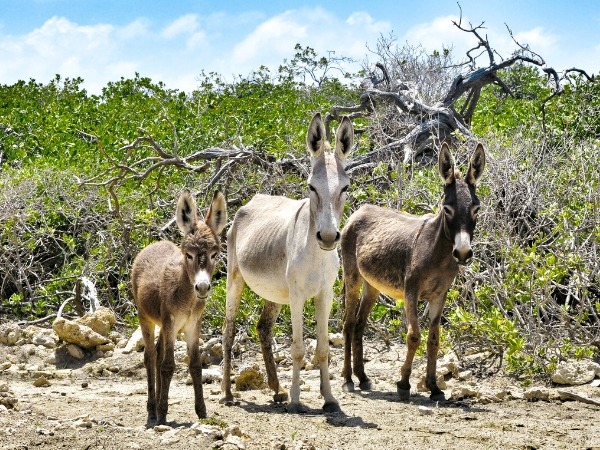
The donkeys are far from shy; they have learned over the years that the sound of an approaching engine often heralds the arrival of a fresh batch of carrots. As you begin your journey through the winding dirt paths of the enclosure, you will quickly find yourself surrounded by a sea of velvet ears and inquisitive brown eyes.
The interaction between humans and donkeys at the sanctuary is remarkably gentle. Because the animals are well-cared for and accustomed to visitors, they exhibit a level of curiosity that is both charming and persistent. They will often approach the car windows, peering inside with a hopeful expression that is difficult to resist.
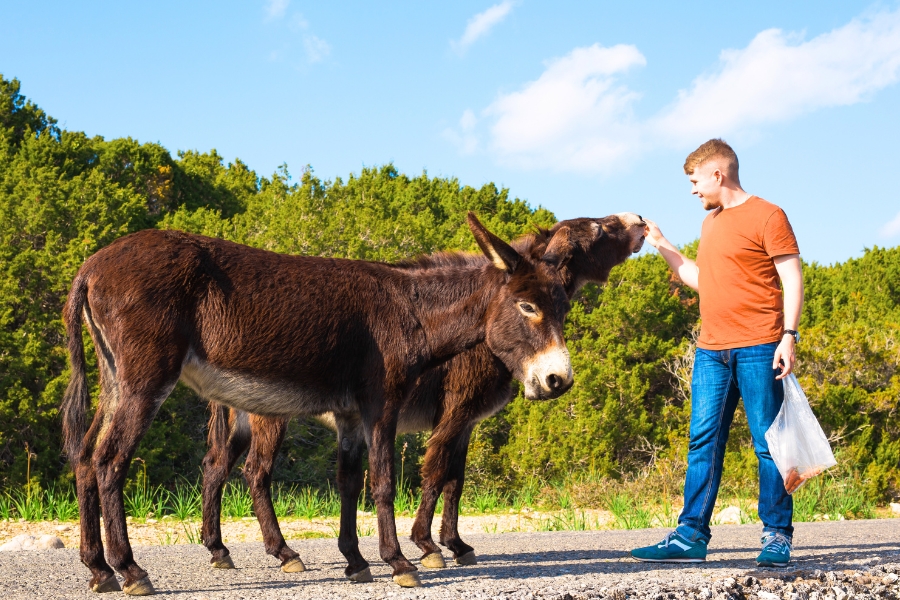
Feeding is a major part of the experience, and the sanctuary encourages visitors to purchase bags of carrots at the entrance. The proper etiquette is to feed them with a flat palm, ensuring that no fingers are mistaken for treats. Watching a young child or even a seasoned traveller giggle as a donkey delicately takes a carrot from their hand is a reminder of the simple joy that comes from animal companionship.
While the majority of the sanctuary’s 800 donkeys roam freely across the main park, there are several specialised areas dedicated to residents who require extra attention.
The Care Meadow is a particularly moving section of the facility. Here, senior donkeys who have reached the twilight of their lives, as well as those with permanent physical disabilities or chronic illnesses, receive tailored medical care and softer feed. It is a quiet space that highlights the sanctuary’s commitment to providing a "forever home". These animals are not simply kept alive; they are given a quality of life that allows them to age with dignity, surrounded by caregivers who know each of them by name.
Another heart-melting highlight is the nursery, often referred to as the Mommy Meadow. This protected area is reserved for pregnant jennies and those with newborn foals. In the wild, young foals are exceptionally vulnerable to predators and traffic, but within the safety of the sanctuary, they can grow and play under the watchful eye of their mothers. Seeing the young foals frolicking in the dust or napping in the shade provides a hopeful look at the future of the sanctuary’s population.
Furthermore, the sanctuary often takes in other rescued animals that have nowhere else to go. It is not uncommon to spot large iguanas sunning themselves on the rocks, land tortoises moving slowly through the brush, or even occasional flamingos resting near the water troughs, making the site a broader refuge for Bonairean wildlife.
To ensure that you have a safe and enjoyable tour around the Donkey Sanctuary, you must observe the following essential guidelines for visitors.
Visiting the Donkey Sanctuary Bonaire offers a profound emotional experience that lingers long after you have left the island. There is a specific kind of peace that comes from being surrounded by animals that ask for nothing more than a bit of food and a gentle touch. It is an experience that reminds us of our responsibility to the animals that have served us throughout history and the joy that can be found in their simple presence.
The best way to experience this sanctuary and the rugged beauty of Bonaire’s southern landscape is by renting a car. Having your own vehicle provides the freedom to navigate the sanctuary’s drive-through paths at your own speed, allowing you to linger in each section without being rushed by a tour group.
Outside the sanctuary gates, a rental car is the key to unlocking the rest of the island’s treasures, from the historic slave huts and the pink-hued salt pans to the secluded coves where the wild coast meets the Caribbean Sea. Book your car on Final Rentals today and begin your exploration of the Donkey Sanctuary and beyond.